At Translationz, we take a structured and supportive approach to mentoring and training interpreters, particularly those working in new and emerging languages. Our process focuses on building confidence, ethical awareness, and subject-matter expertise through guided mentorship and ongoing professional development.
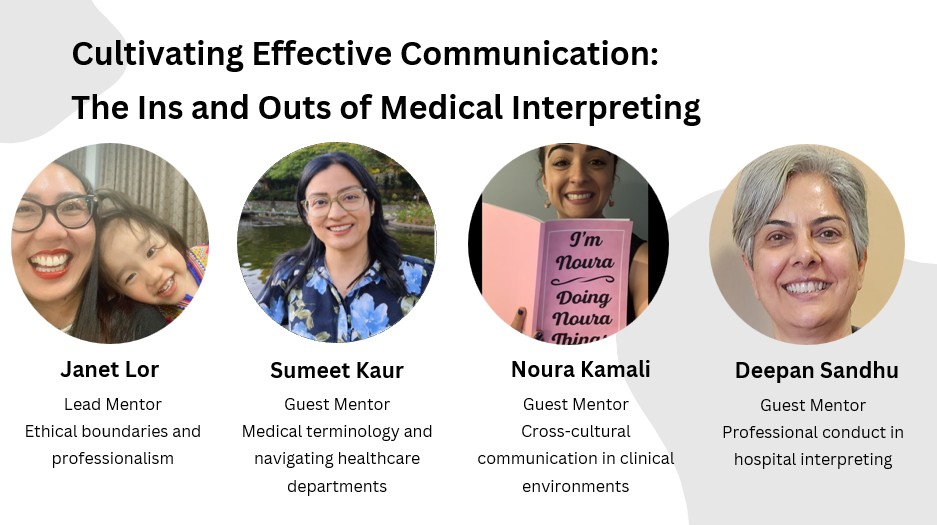
In May, we delivered a 4-week Medical Mentorship Program designed to strengthen interpreter readiness for complex healthcare environments. Each week focused on a key area essential to quality interpreting:
- Week 1: Ethical boundaries and professionalism
- Week 2: Medical terminology and navigating healthcare departments
- Week 3: Cross-cultural communication in clinical environments
- Week 4: Professional conduct in hospital interpreting
Led by experienced mentors, including NAATI-recognised practitioners, the sessions combined real-world case studies, interactive discussions, and practical skill-building. This model has become a cornerstone of how we mentor interpreters across all language groups, including those working in emerging or low-demand languages.
Our Mentoring Process
- Assessment and Identification
We begin by identifying areas where additional support or knowledge-building may be beneficial—particularly in high-stakes settings such as health, legal, and community services. - Tailored Training Modules
Modules cover ethics, professionalism, terminology, role boundaries, and effective communication within Australian institutional contexts. - Mentor-Guided Learning
Each session is paired with a lead mentor who provides guidance, feedback, and contextual advice. Mentors help bridge the gap between theoretical knowledge and real-world application. - Practical Scenarios and Reflection
Sessions include real world assignments, role-play scenarios, and reflective discussions that encourage interpreters to share experiences and problem-solve collaboratively. - Ongoing Support and Recognition
Interpreters receive certificates of participation and PD recognition for each session. Continued access to recordings and resources supports long-term learning and reinforcement. Participants are encouraged to maintain contact with mentors for follow-up advice and guidance.
Outcome
This process ensures interpreters are equipped to handle complex situations with professionalism, cultural sensitivity, and confidence. By investing in mentorship and targeted training, Translationz continues to strengthen interpreter capability, improve service quality, and enhance client outcomes across all sectors.