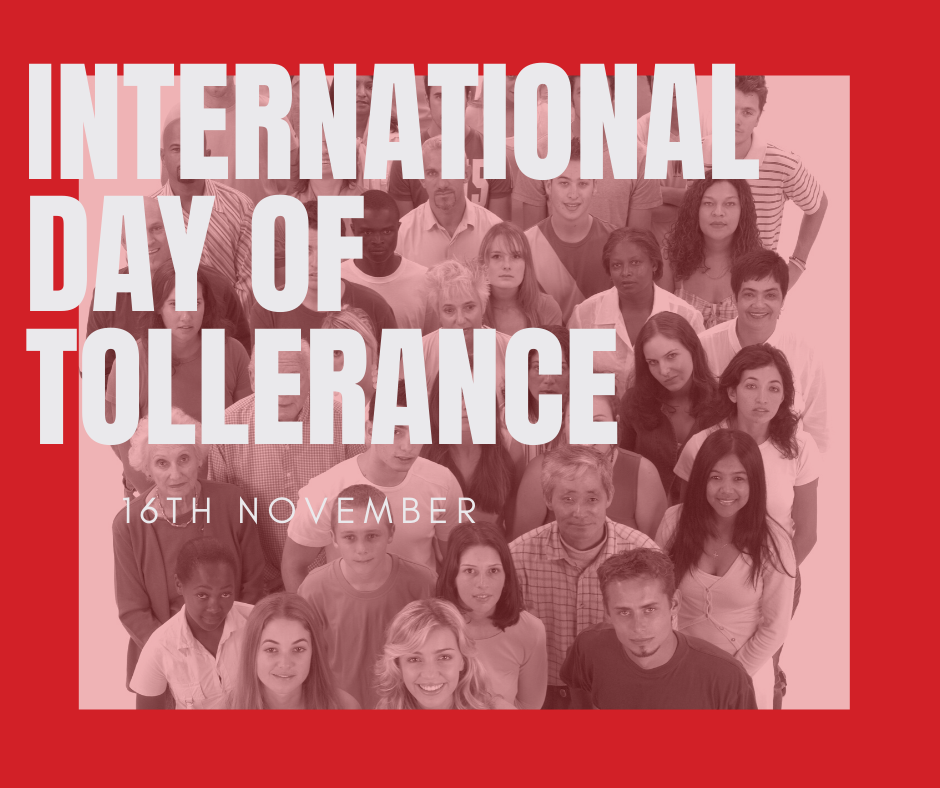
The International Day of Tolerance originated in 1996 when the United Nations (UN) General Assembly invited all UN State Members to participate on the 16th of November. The UN defines tolerance as: Respect and appreciation of the rich variety of our world’s cultures, our forms of expression and ways of being human.
Tolerance is the recognition of human rights and freedoms of others around you, even if they may express themselves in a different way to you. It is a simple fact that humans are naturally diverse in many ways and therefore the only way for people to survive peacefully is to develop and implement tolerance for all.
The International Day of Tolerance invites us to think about the biases we have and reconsider the way we treat those around us. It does not force anyone to agree with or participate in practices they do not typically engage with but simply respect and tolerate the different ways culture manifests and the different ways people express themselves. This day is also important for UN States to regularly ensure equal treatment and opportunity for all groups and individuals in their society. The UN declares that while tolerance is a moral duty, it is also a political and legal requirement for individuals, groups and States. This is because tolerance can be the difference between life and death for many people in the world.
The main reason that the International Day of Tolerance exists is to combat against hate crimes. According to National Today, each day on average, eight black people, three white people, three gay people, three Jewish people, and one Latinx person become victims of hate crimes. Race is the most common motive for hate crimes, followed by sexual orientation and religion. At Translationz, we are concerned by these facts because we care about our staff, clients and patients we serve, despite their race, religion, sexuality, gender or background.
No one is born with inherent hate. Hatred and biases are taught to us by others around us or by ourselves. This means that people have the potential to change their hateful behaviour to tolerance.
What can we do to promote tolerance? Educational programs that target peoples’ fear and exclusion of others can pull apart the reasons why people hold judgement and hate. Once these ways of thinking are dismantled, there is more room for tolerance. Education on tolerance, particularly in young people, is incredibly important for developing capacities for independent judgement, critical thinking, and ethical reasoning. Differences in culture and diversity should be celebrated, not reasons for conflict.
Tolerance is like a tree. You need to sow it in young minds, constantly water it in order for its foundations to take roots, and protect it from parasites like hatred and discrimination.